Is a Handfasting Legally Binding in the UK? What Every Couple Should Knowew Blog Post
Hi, it’s Debbie here. If you’re thinking about a handfasting, one of your first questions is probably: is it legally binding?
The short answer is no. In England and Wales, a handfasting on its own does not make you legally married. But that doesn’t make it any less meaningful, and it is very easy to have both. Here’s how it works.
A quick note: this blog is about England and Wales. In Scotland, handfasting can be legally integrated into an official ceremony if your celebrant is registered with National Records of Scotland (NRS). The rules are different again in Northern Ireland.
Is handfasting legally binding in the UK?
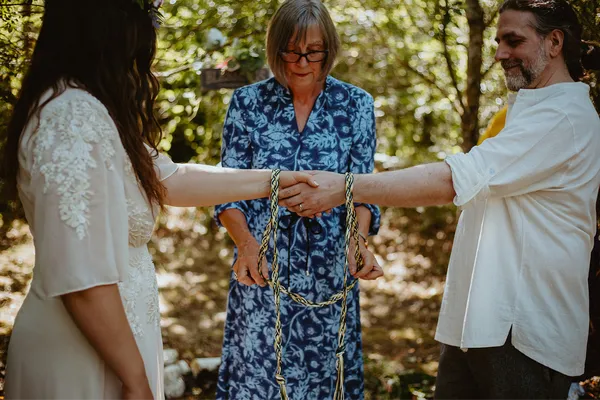
In England and Wales, the legal marriage and the handfasting ceremony are two separate things. You can have a beautiful handfasting with cords, vows, readings and rituals, but the law also needs a few specific steps to be completed before you are married.
Once you understand the difference, you can plan with confidence, knowing exactly which part is symbolic and which part is legal.
What makes a marriage legally recognised?
To be legally married in England and Wales, you need to:
give notice at your local register office at least 29 days beforehand
hold the ceremony at a register office, an approved venue or a registered place of worship
have a registrar, or another person authorised by law, lead or attend it
have two witnesses
sign the marriage paperwork on the day
Once you have given notice, you have 12 months to hold your ceremony. Your circumstances can affect the process, particularly if one of you is subject to immigration control, so always check with your local register office. You can read the official guidance here:
Can a celebrant perform a legally binding handfasting?
Not at the moment in England and Wales. A celebrant can create and lead a beautiful handfasting ceremony, but being a celebrant does not give us the legal power to marry you. That part has to be done by a registrar, or within a religious marriage that meets its own legal requirements.
So it is always worth asking your celebrant exactly what their role is: will your ceremony be the legal marriage, or a symbolic one?
How do couples have both?
There are two simple ways to have the handfasting you want and be legally married.
On the same day. At the last handfasting I led, in a barn, the registrar carried out the legal marriage first. Five minutes later, I led the couple’s handfasting. Some registrars are also happy for a handfasting to be included within the ceremony itself, so do ask.
On different days. Other couples choose a short, simple ceremony at the register office with two witnesses, and then hold their handfasting on another day, wherever they like. Your handfasting can then focus entirely on what matters to you: your story, your promises, your family, nature, spirituality and the life you are choosing together.
What about a handfasting in a beautiful outdoor location?
A civil marriage has to take place at a register office or an approved venue. A symbolic handfasting gives you far more freedom. You can hold it in a woodland, a garden, a field or anywhere that means something to you both.
This is one of the main reasons couples keep the two apart. The legal paperwork is taken care of in one place, and the outdoor wedding ceremony they have always pictured happens in another.
What if you’re not getting married?
Handfasting doesn’t have to be about marriage at all. It can also celebrate:
a commitment between two people
a vow renewal
a new chapter or significant life transition
a personal commitment to yourself
Here, there is no legal marriage taking place, and that can be exactly the point. The ceremony is about meaning rather than legal status. If handfasting is new to you, you might like to start here
Could the law change?
Possibly. In 2026 the government asked for views on modernising wedding law in England and Wales, including whether independent celebrants like me could lead legally binding ceremonies. Nothing has changed yet, and I’ll update this blog when it does.
So, is a handfasting legally binding?
In England and Wales, a handfasting is not legally binding on its own. If you want to be legally married, you need to follow the legal process as well.
But your handfasting can still be the heart of your day. The legal part tells the law that you are married. The handfasting tells your story. Having both gives you the best of both worlds.
Your handfasting can still be completely yours
A handfasting is far more than a decorative extra. It gives you space to speak the words you actually want to say, include rituals that have meaning to you, involve the people you love and create a ceremony that reflects who you are.
The law has its requirements. Your ceremony has your story.
Create your handfasting ceremony
As a handfasting celebrant, I work with couples across Warwickshire, Coventry, Solihull and the wider West Midlands, whether the handfasting is part of your wedding day or a ceremony of its own. You can read more here:
If you’d like to talk through your plans, I’d love to hear them
Debbie x
I’m a celebrant, not a solicitor, so please treat this as a general guide and check the details for your own circumstances.
Last checked: October 2026.
