What Is a Handfasting? The Ancient Ceremony Explained
Hi, it’s Debbie here. If you’ve ever wondered what handfasting is, you’re not alone. Perhaps you’ve seen photographs of hands tied with beautiful ribbons, or heard it mentioned alongside Pagan or Celtic ceremonies.
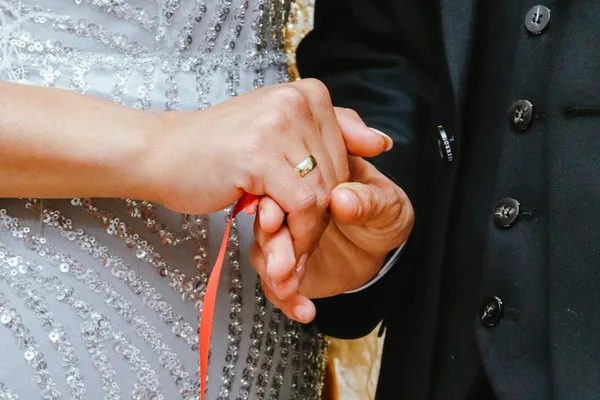
A handfasting is a ceremony in which two people’s hands are joined and gently bound together with cords or ribbons, as a symbol of love and commitment. It can be part of a wedding, a vow renewal or a commitment ceremony. It can also be a ceremony for one person, marking an important turning point in life.
Let’s explore where it comes from, what happens, and how it can be shaped around you.
What is a handfasting?
At its heart, a handfasting ceremony is a symbolic ritual of commitment, joining and intention. The tying of the hands represents the joining of two lives, two paths or two intentions.
There is no single way a handfasting has to look. It can be a spiritual wedding ceremony, a Pagan handfasting ceremony, nature-based, deeply personal or wonderfully simple. The meaning comes from the people taking part and the intentions they bring.
Where does handfasting come from?
Handfasting is often associated with Celtic and Pagan traditions. The word comes from an old expression meaning to make a promise by joining hands. In medieval Scotland and the north of England, a handfasting was a betrothal: a formal promise to marry.
The cord-tying ceremony we know today is a more modern revival, inspired by those older traditions. So while handfasting has ancient roots, your ceremony doesn’t have to recreate history. It can honour tradition while still being completely yours.
What does a handfasting represent?
The joining of hands is a beautiful symbol. For a couple, it can represent:
love and commitment
partnership
two lives coming together
the promises you are making to one another
the journey you are choosing to take together
The cords or ribbons can carry personal meaning too, with colours, materials or objects chosen because they represent something important to you.
Can handfasting be for one person?
Absolutely. Although handfasting is usually associated with couples, I believe there is something incredibly powerful about using this ritual to mark a personal transition. There are moments in life when something has changed, even if nobody else can see it yet.
Perhaps you are:
leaving a relationship
marking a significant birthday or milestone
leaving a career or beginning a new one
moving home or starting a new adventure
coming through a difficult period
choosing to live more authentically
making a deeper commitment to yourself
Sometimes we know inside that we have crossed a threshold, but we have nothing tangible to mark it. A handfasting can give that transition a moment. It becomes a rite of passage: a ceremony that honours what you have lived through, what you are leaving behind and the person you are becoming.
You might create your own promises:
This is who I have been.
This is who I am now.
This is who I am choosing to become.
Marcia was my first solo handfasting, and I will never forget her. After another ’failed’ marriage, she was struggling with the past, the reasons why it had ended, and the fear of facing life on her own again. Together, we created a ceremony that helped her acknowledge her past, understand her part in it, and make a conscious commitment to stand in her truth and embrace the life ahead. Reading out her vows to herself was such a powerful moment for her.
Why might someone choose a handfasting?
For couples, a handfasting can be an alternative to a traditional wedding, or a meaningful symbolic element within a wider ceremony. You might choose it because you want your ceremony to feel:
personal rather than prescriptive
connected to nature
spiritual without belonging to a particular religion
intimate and meaningful
rooted in symbolism and ritual
reflective of your relationship and your values
What happens during a handfasting ceremony?
There is no single script or fixed order. Your ceremony is created around your story. Depending on what feels right for you, it might include:
welcoming words
a reading, poem or piece of music
words about your journey or relationship
personal vows or promises
calling upon the elements
the joining or binding of hands
blessings
family or friends taking part
exchanging rings or other meaningful objects
a closing ritual
For a couple, the cords are placed around the joined hands and tied during the ceremony. For an individual ceremony, the symbolism is adapted so that the ritual represents your own commitment. It doesn’t need to be elaborate. Sometimes the simplest rituals carry the deepest meaning.
Can handfasting be spiritual?
Yes, but it doesn’t have to be. You might include nature, the seasons, the elements, ancestors, prayer, meditation, candles, flowers or crystals. Equally, you might simply want a beautiful, meaningful ceremony without any particular spiritual belief attached. There is no right or wrong way. What matters is that the ceremony reflects what is true for you.
Can family, friends and pets be involved?
They certainly can. Family members or friends might each hold a cord, offer a blessing, read something meaningful or speak words of love and support. For a couple, this can symbolise the people who surround your relationship. For an individual ceremony, it could represent the people who have walked alongside you through a particular chapter of your life.
Much-loved pets can be part of the ceremony too. And if there is someone you wish could be there, we can honour them with a candle, a photograph or a few quiet words.
Does a handfasting have to be a wedding?
No. A handfasting can be part of a wedding, but it can also be a commitment ceremony, a vow renewal, a blessing, a rite of passage or a celebration of a new chapter.
Marjorie and May are a lovely example. After 20 years of marriage, they chose a handfasting ceremony to celebrate their journey together, surrounded by family and friends in the heart of a beautiful forest. Twenty years of ups and downs, laughter, tears and tantrums had brought them to this moment. As they renewed their vows with such tenderness and love, you could feel that this was a love shaped not by perfection, but by everything they had journeyed through together.
Wondering whether a handfasting makes you legally married? I’ve answered that here
The beauty of marking a transition
We often celebrate beginnings: weddings, births, new homes and new jobs. But life also contains endings. Relationships end. Careers change. We lose animals. Children grow up. We leave behind identities that no longer fit.
These moments can be just as significant, and sometimes they deserve to be witnessed. A ceremony helps you honour an ending rather than simply rushing into the next beginning. It gives you a moment to stop, acknowledge, honour and choose.
Creating a handfasting that is yours
Whether you are celebrating your love with another person or marking a transition in your own life, your ceremony doesn’t have to look like anyone else’s. Your words can be your own. Your symbols can have personal meaning. Your location can be somewhere special to you.
As a handfasting celebrant, I create ceremonies for couples and individuals across Warwickshire, Coventry, Solihull and the wider West Midlands. You can read more about how I work here.
Explore your handfasting ceremony
If you’re drawn to the idea of handfasting, I would love to help you create a ceremony that reflects your story. Your life has its own story. Your ceremony can too.
If you’d like to talk through your own ceremony, book a free call with me here:
Debbie x
